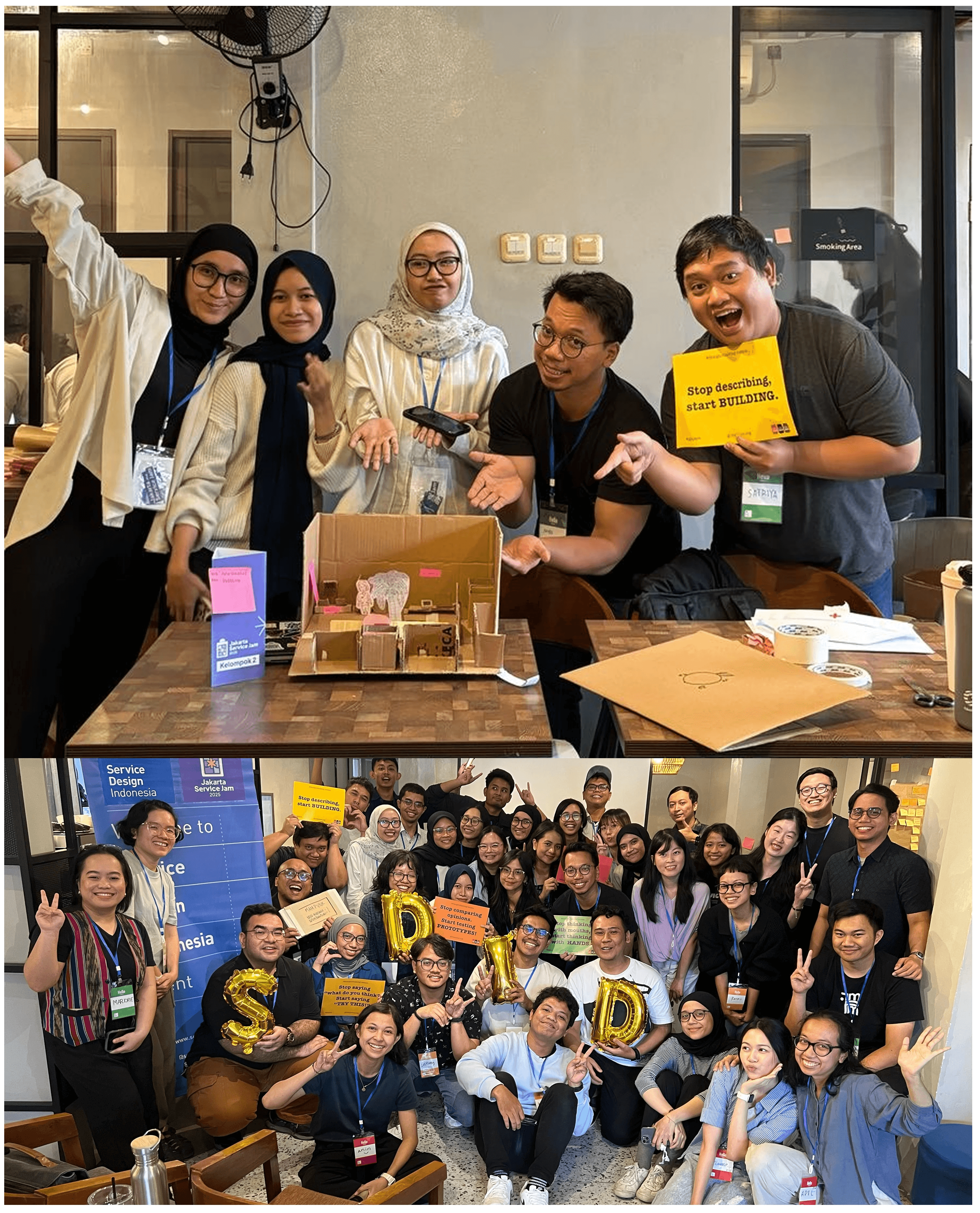
I joined Jakarta Service Jam events and concepting ideas of Happy Waits with the team. Happy Waits is a conceptual idea using a service design approach to address stressful situations while waiting in the hospital. Through a custom physical product combined with an improved healthcare service flow and environment, Happy Waits transforms waiting time into meaningful time rather than wasted time

Type
Case Study
Role
Service Designer, Researcher
Duration
February 2025
Problem
A long-bored-stressful waiting time to consult ‘5 mins’ with doctor
While accessing healthcare services—whether for a doctor consultation, waiting for a lab assessment, or picking up medication at the pharmacy—the waiting time can be exhausting, especially if you're a patient who is ill enough to need to be treated immediately but not in a critical condition that requires emergency care.

Collect Information
Understanding the flow of healthcare services
To better understand the user experience in accessing healthcare services, my team and I visited a private clinic to learn about their patient care process.

During our visit to the private clinic, we learned about their customer journey, which includes the following steps:

We noticed that patients often experience waiting times at various stages—from the initial registration, where they wait to be processed, all the way to the final step of picking up their medication, which also involves waiting.
Collect Information
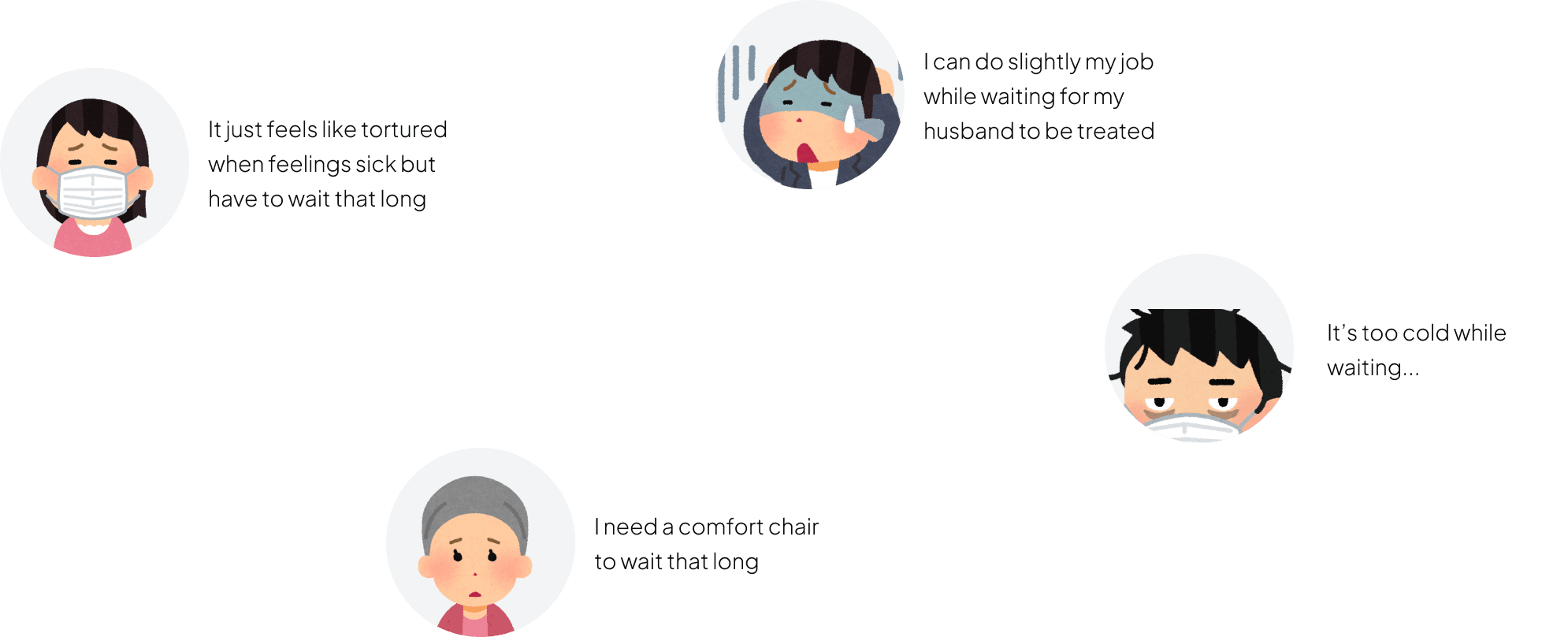
Gaining insight into what patients feels during their waiting time

We conducted brainstorming and collecting information from users about their experiences with healthcare services, both from private and government. The gathered insights were various, then I categorized into specific themes. Then together with the team, I explored various ideas and possibilities to help reduce users’ pain points
Ideas
How might we help patients and their companions feel less stressed and more ease during the waiting moment?
After identifying key pain points during the waiting experience, we grouped our insights and brainstormed improvement ideas of which areas can be improved to create waiting environment less stress. From there, we began drafting concepts and moved into rough prototyping.
Space
Creating a safe and comfortable waiting area is essential to support patients' well-being during their wait
Providing a space that allows companions to spend their time more productively can enhance the overall experience.
Services
Providing informative services during waiting time to increase user awareness—for example, a clear step-by-step guide of the healthcare process they are about to undergo or are currently queued for, along with estimated waiting times
Expected Impact
Creating a waiting environment that feels meaningful and even enjoyable by turning waiting time into quality time, not wasted time.
Ideas
Proposing improvements to the waiting area environment for greater comfort

Waiting emerged as one of the most frustrating aspects for users. While queuing is an unavoidable part of accessing healthcare services. Proposing idea by creating the environment to feel less feelings of waiting is one of our rough concept. We craft a layout healthcare services that provide areas with different functions for patients or companions to feel less stress, killing time without feeling wasted.

Ideas
Physical Bracelets: No more skipped queues
To prevent patients from being skipped while waiting for their turn—whether to see the doctor or move through other service stages—they will be alerted through a wireless physical device. These devices send notifications indicating which stage the patient is heading to. For example, when it’s almost time for their consultation, patients receive an alert a few turns in advance—such as when there are two patients ahead of them.
The notifications are not limited to text; they also include voice prompts, and haptic feedback. The color helps show which stage the patient is currently in, while the voice prompt guides them to the next stage—especially useful for elderly patients who may have difficulty reading text. Haptic feedback provides a physical cue, helping ensure that patients stay aware and responsive to updates.

Validating Ideas
User testing Phase 1: Understanding user’s perspective with the idea
An idea without execution means nothing—but executing without involving the user is a missed opportunity. That’s why I tested the concept using a simulated prototype directly with user. I prepared specific scenarios, and user was given a brief explanation before the simulation began. Due to limited time and pretty tight with the event schedule, simulation has done with one user. His name is Iqbal, an employee, aged 25 years old.
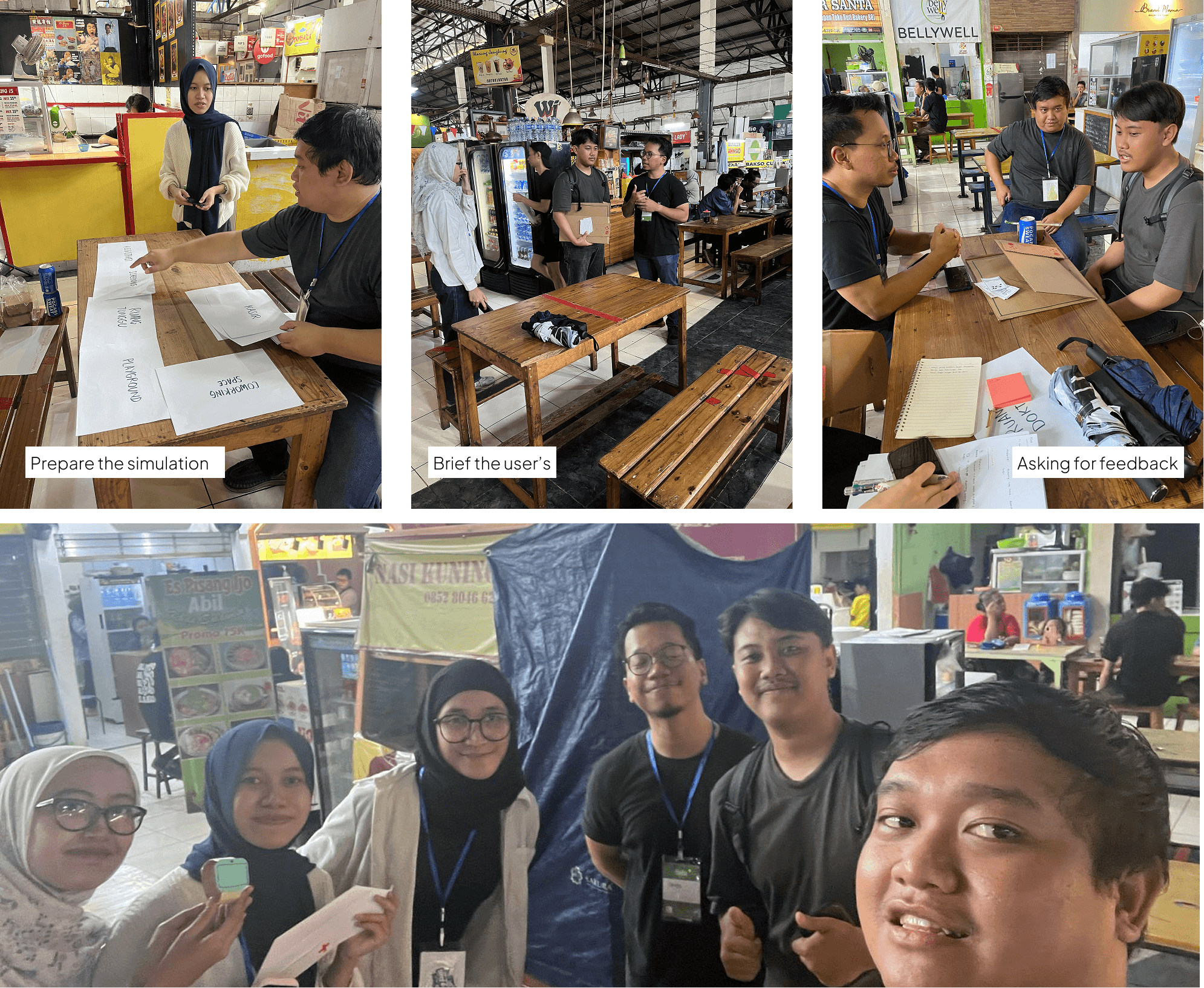
Feedback take aways:
The wireless physical devices were helpful during the waiting process, as they raised awareness of what step to take next after completing a stage.
Making the device more visually attractive by using different colors was suggested.
Based on personal experiences with government insurance (BPJS), the process can be confusing due to unclear stages.
Iteration Process
Iterated to optimize device functionality
Nothing in this world is perfect—including our team’s process. From our first user, we received feedback about making the notifications more engaging, such as using changing colors. That feedback sparked new ideas for me and the team. I realized that adding color indicators could not only make the device more visually appealing but also support users with visual impairments by combining colors with other cues. So, we iterated on the physical device to change colors at each stage of the process.

Results 2
User testing Phase 2: Validating the iteration
We tested the iteration with a user to gather feedback on the Happywaits concept. The process was similar to the first round—users were given a brief explanation before starting a specific scenario in the simulation. Due to the tight event schedule, we were only able to test with one user, but the insights we gained were still valuable for refining the idea.

Feedback take aways:
It makes it easier for them to understand what stage they need to go to next.
Having a variety of waiting areas gives users options while they wait, which is helpful for them
Reflection
What I learned
Prototyping isn’t always about digital devices. I learned that in service design, prototyping often involves simulating a process or flow rather than creating a digital interface.
Limited time was a challenge. I realized that the idea still needs more user-focused research. However, due to the tight schedule of the event, we had limited time to explore deeper insights fro user’s feedback.
Service design expanded my perspective. I learned that service design is complex and requires thinking beyond a single role. It pushes us to consider multiple roles and viewpoints involved in the entire experience.